Industrial vacuum systems rarely fail because the pump looks impressive on paper. They fail when vapor, dust, heat, or neglected maintenance meets the wrong design. A screw vacuum pump deserves attention because it can create a clean, continuous vacuum without oil entering the process chamber. That matters in food packaging, chemical processing, electronics, and central vacuum systems.
John F. O’Hanlon, a respected vacuum-technology author, wrote, “A vacuum is a space from which air or other gas has been removed.” His definition sounds simple, but industrial applications make it demanding. The pump must remove gases steadily while tolerating changing loads, moisture, and process contaminants. Dry screw designs use carefully matched rotors and controlled clearances. They can reduce oil contamination risks and support cleaner production areas. They also offer practical advantages during long operating cycles, especially when stable performance matters more than short-term purchase price.
Still, no pump is perfect. A screw vacuum pump may require correct cooling, inlet filtration, and periodic inspection. Ignoring condensable vapor can damage performance. Poor sizing can waste energy and extend evacuation times. These limitations deserve honest attention. Engineers should compare ultimate pressure, pumping speed, gas composition, noise, service access, and total operating cost. A well-selected pump should fit the process, not merely meet a catalog number. That careful choice can mean fewer interruptions, cleaner products, and a vacuum system that remains dependable beside the production line.
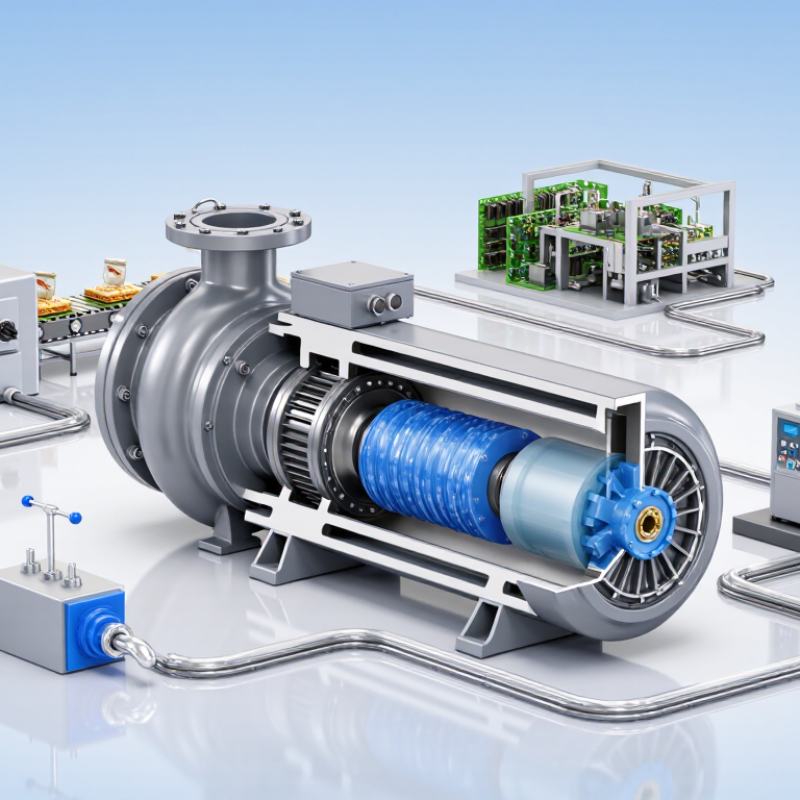
A screw vacuum pump is a positive-displacement machine with two intermeshing helical rotors. As the rotors turn, they trap gas at the inlet and move it toward the exhaust. The shrinking spaces compress the gas continuously, creating vacuum without the pulsing action common in reciprocating pumps.
Most industrial models use dry operation, meaning no oil enters the process chamber. This matters in food packaging, semiconductor production, chemical handling, and laboratory systems. Oil-lubricated versions still have a place where vapor control and operating cost matter more than extreme cleanliness. The distinction is often overlooked.
Performance depends on inlet pressure, gas composition, temperature, and leakage. ISO 21360 provides methods for measuring vacuum pump performance, including pumping speed and ultimate pressure. These figures should be checked under comparable conditions, not copied from a single brochure. The IEA’s Energy Efficiency 2023 analysis estimates that electric motor systems consume roughly 45% of global electricity. Therefore, rotor efficiency, control strategy, and heat removal deserve serious attention.
In field installations, a screw pump can run for long periods with low vibration and stable airflow. It may also tolerate process vapor better than some alternatives, but condensation can still damage internal parts. That is where experience matters. A technician should review startup cycles, filtration, exhaust routing, and maintenance records before selecting capacity. Bigger is not always better.
A screw vacuum pump uses two interlocking helical rotors to move gas through a sealed chamber. As the rotors turn, gas enters through the inlet and becomes trapped between the screw flights. The rotating profile carries it forward, gradually reducing its volume and increasing its pressure. Compressed gas then leaves through the discharge port. The rotors do not normally touch, so precise clearances and timing gears are essential. In dry models, the pumping chamber contains no operating oil. This helps protect processes that require clean vacuum conditions.
In industrial service, screw pumps handle continuous operation, vapor loads, and changing production demands. Their wide internal passages can reduce blockage risks when moisture or process vapor enters the system. However, performance is not automatic. In the field, technicians often find that leaks, poor cooling, or incorrect inlet filtration reduce ultimate pressure. The ideal operating diagram can look simple; real machinery is less forgiving. Regular checks of seals, filters, temperature, and vibration reveal problems early. Selecting the pump also requires reviewing gas composition, target pressure, cycle time, and required flow rate.
Why Choose a Screw Vacuum Pump for Industrial Use?
Key Advantages for Industrial Applications
A screw vacuum pump supports demanding industrial processes with steady, oil-free vacuum performance. Its dry compression design keeps process chambers cleaner and reduces contamination risks. This matters in packaging, chemical processing, electronics, and material handling. Less contamination can protect product quality and simplify maintenance work.
The pump handles frequent operation without relying on oil changes inside the compression chamber. Operators can often plan service around production schedules instead of reacting to sudden residue problems. Its wide operating range also supports different vacuum levels across one facility. Energy use may remain predictable when the pump is correctly sized and controlled. Oversizing still wastes power.
From practical plant assessments, noise and heat management deserve attention. A well-installed screw pump can operate smoothly, but poor ventilation may raise discharge temperatures. Filters, seals, and cooling paths need regular inspection. Remote monitoring can track pressure, temperature, and running hours before small faults become expensive stoppages. Data helps.
No pump fits every process. Sticky vapors, abrasive dust, or heavy moisture may require protective systems and careful material selection. Engineers should test actual process conditions rather than trust catalogue figures alone. This step is sometimes skipped. It should not be. A reliable vacuum system depends on correct sizing, proper piping, trained operators, and documented maintenance.
Why Choose a Screw Vacuum Pump for Industrial Use?
Screw vacuum pumps suit processes requiring steady vacuum, frequent cycling, and clean operation. Their contact-free screw design can reduce wear during continuous duty. They commonly serve packaging, vacuum drying, plastics processing, heat treatment, and material handling. However, selection depends on pressure range, gas composition, moisture load, and required pumping speed. A pump designed for dry air may struggle with solvents or heavy vapor.
Energy deserves careful attention. The International Energy Agency’s Energy Efficiency 2023 report states that industry consumed about 37% of global final energy in 2022. Vacuum equipment forms only part of that demand, but poor sizing still creates avoidable losses. Oversized pumps may run below their efficient range. Undersized pumps can operate continuously and overheat. ISO 21360-1 provides methods for measuring pumping speed and ultimate pressure, helping users compare performance under defined conditions. Real factory results can differ. This is where many purchasing decisions become less certain.
Tips: Check the required operating pressure at the process inlet, not only the pump outlet. Install suitable inlet filtration for dust and liquid carryover. Confirm cooling capacity at the highest room temperature. Use gas ballast when vapor enters the system. Record pressure, current, temperature, and cycle time during commissioning. Review these readings after several weeks. The first setting is rarely perfect. Select a booster only when deeper vacuum or faster evacuation justifies its additional energy and maintenance needs.
Screw vacuum pumps provide oil-free, continuous operation for industrial processes that require stable vacuum performance, low maintenance, and tolerance of vapor or dust loads.
The chart shows representative target operating pressures for common industrial applications. Lower absolute pressure indicates a deeper vacuum; actual requirements vary with process design, gas composition, temperature, and throughput.
Choosing the right screw vacuum pump starts with the process, not the catalogue. Define the required vacuum level, pumping speed, and operating cycle. A pump for continuous packaging service may differ greatly from one handling intermittent furnace evacuation. Estimate the actual gas load, including air leakage, vapor, and process gases. Do not size the pump from chamber volume alone. That shortcut often creates unstable performance.
Check the gas temperature and its moisture content. Condensation can damage internal surfaces or increase maintenance time. If dust or small particles enter the system, confirm the pump’s tolerance and install suitable protection. Decide whether a dry or lubricated design fits the process. Dry operation can simplify product protection, while lubricated designs may suit demanding loads. Review materials, seal construction, motor efficiency, noise, and available control signals. Small details matter.
Ask for performance data at your real inlet pressure, not only the ultimate vacuum figure. Request test conditions and confirm the expected pumping speed across the working range. In field installations, I have seen a technically capable pump underperform because the inlet pipe was too narrow. That mistake is easy to miss. Check maintenance access, spare-part availability, cooling requirements, and service intervals before purchase. A variable-speed drive may reduce energy use, but it adds control complexity. This trade-off deserves an honest review. If possible, run a trial with representative vapor and dust loads. The first selection is rarely perfect. Data from that trial should guide the final specification.
| Selection Dimension | Recommended Screw Vacuum Pump Characteristics | Typical Industrial Reference Data | Why It Matters | What to Confirm Before Purchase |
|---|---|---|---|---|
| Ultimate Pressure | Select a dry screw pump when the process requires clean vacuum without oil backstreaming. Choose the required pressure according to the actual process set point rather than the pump's best laboratory value. | Approximately 0.01–1 mbar for many industrial dry screw configurations; the achievable pressure varies with design, gas load, temperature, and system leakage. | Provides a clean vacuum environment for processes that can be affected by oil contamination. | Compare ultimate pressure at the intended gas ballast, operating temperature, and inlet configuration. |
| Pumping Speed | Size the pump according to chamber volume, target pump-down time, gas inflow, outgassing, and conductance losses in valves and piping. | Roughly 20–1,000 m³/h across common industrial screw-pump size ranges; actual speed changes with inlet pressure and gas composition. | A correctly sized pump reduces cycle time without unnecessarily increasing power consumption or purchase cost. | Request a pumping-speed curve rather than relying only on the nominal displacement figure. |
| Process Gas Compatibility | Use a corrosion-resistant and process-compatible version for gases containing solvents, acids, alkalis, dust, or reactive compounds. | Material selection may include corrosion-resistant internal surfaces, protective coatings, purge connections, and controlled gas ballast. | Improves service life and reduces the risk of internal corrosion, deposits, and unexpected shutdowns. | Provide the complete gas composition, concentration, temperature, pressure, and moisture content to the supplier. |
| Dust and Particulate Handling | For powder-producing processes, use suitable inlet filtration, separators, purge arrangements, and a pump design intended for particulate exposure. | A separate pre-separator or high-efficiency inlet filter is often required when solids can enter the vacuum line. | Protects the screw rotors and reduces abrasive wear, blockage, and maintenance frequency. | Determine particle size, concentration, stickiness, temperature, and filter cleaning requirements. |
| Condensable Vapors | Choose a pump with an appropriate gas-ballast system, vapor-tolerant operating mode, and controlled warm-up procedure. | The allowable vapor load depends on vapor type, inlet pressure, pump temperature, gas ballast, and condensation behavior. | Helps prevent liquid accumulation, corrosion, deposits, and loss of pumping performance. | Confirm water-vapor capacity and solvent compatibility under the expected process conditions. |
| Oil-Free Operation | Select a dry screw configuration when the process, product, or downstream equipment must be protected from oil contamination. | The compression chamber does not require lubricating oil; bearings and gear compartments may still require lubrication outside the gas path. | Reduces the risk of hydrocarbon backstreaming and simplifies contamination control. | Verify the boundary between the gas path and lubricated components, including shaft-seal requirements. |
| Energy Consumption | Prefer variable-speed control when the vacuum demand changes significantly during a production cycle. | Power demand depends on pumping speed, pressure, gas load, motor efficiency, cooling method, and control strategy. | Variable-speed operation can reduce energy use during partial-load periods and improve process control. | Compare electrical input at several operating points, not only at maximum speed. |
| Operating Temperature | Select a cooling and temperature-control arrangement that matches continuous duty, ambient conditions, and vapor load. | Many industrial units use air or water cooling; allowable ambient and discharge temperatures must be confirmed for each design. | Stable temperature helps maintain clearances, protect seals, and reduce condensation inside the pump. | Check cooling-water quality or ventilation requirements, ambient limits, and warm-up time. |
| Noise and Vibration | Choose a low-vibration installation package with suitable mounting, flexible connectors, and acoustic treatment where required. | Sound pressure commonly depends on pump speed, enclosure, installation, and measurement distance; published values must be compared under the same test conditions. | Improves operator comfort and helps protect nearby equipment and piping from vibration-related fatigue. | Request sound-pressure data, vibration limits, foundation requirements, and allowable piping loads. |
| Maintenance Requirements | Evaluate access to filters, seals, bearings, gear oil, purge components, and wear-prone parts before selecting the pump. | Routine tasks may include filter replacement, seal inspection, gear-oil service, purge checks, and periodic condition monitoring. | Predictable maintenance intervals support higher availability and more accurate operating-cost estimates. | Ask for maintenance intervals, recommended spare parts, service procedures, and estimated labor hours. |
| Control and Integration | Select a pump package with the required motor starter or drive, pressure control, alarms, remote signals, and industrial communication interfaces. | Common functions include overload protection, high-temperature alarms, pressure monitoring, emergency stop, and remote start/stop. | Simplifies integration with vacuum controllers, programmable logic controllers, and factory monitoring systems. | Define voltage, frequency, enclosure rating, control protocol, signal types, and safety interlocks. |
| Installation Footprint | Compare the complete package dimensions, service clearances, inlet and exhaust orientation, and lifting requirements. | A packaged screw pump may require additional space for inlet filtration, separators, exhaust treatment, cooling, and maintenance access. | Prevents installation delays and ensures that routine service can be performed safely. | Review layout drawings, center of gravity, connection sizes, lifting points, and foundation loads. |
| Exhaust Treatment | Add condensate collection, mist removal, activated-carbon treatment, thermal management, or other exhaust controls when required by the process. | Exhaust requirements depend on solvent concentration, particulate content, hazardous classification, and local environmental rules. | Reduces workplace emissions and protects personnel, equipment, and the surrounding environment. | Identify exhaust temperature, composition, flow rate, discharge location, and applicable regulations. |
| Total Cost of Ownership | Assess purchase price together with energy, cooling, consumables, downtime, service, spare parts, and expected operating life. | The lowest initial price does not necessarily provide the lowest lifetime cost, especially in continuous-duty or contaminated applications. | Supports a financially sound decision based on production availability and long-term operating expenses. | Use a multi-year cost model based on actual duty cycle, utility prices, maintenance intervals, and downtime cost. |
Note: Performance figures are general industry reference ranges. Final selection should be based on the pump curve, complete process data, applicable safety requirements, and site conditions.